
![[Grape Expectations] Danner 3/4 Zip grape expectations front crop view](http://wild-rye.com/cdn/shop/files/WILDRYE4670.jpg?v=1771442492&width=2048)
![[Grape Expectations] Danner 3/4 Zip flatlay in purple and pink spotted pattern, grape expectations](http://wild-rye.com/cdn/shop/files/DANNER_Grape_Expectations.jpg?v=1771442492&width=2160)
![[Abyss Reef] Close-up front view of the Freyah Bike Pant's high-rise waistband with snap closure in navy](http://wild-rye.com/cdn/shop/files/F26_Holly-Black_FreyahPant-AbyssReef_04.jpg?v=1787176760&width=1536)
![[Abyss Reef] Freyah Pant in abyss reef flatlay](http://wild-rye.com/cdn/shop/files/F26-FreyahPant-AbyssReef_8c120f3b-23a6-4b84-8612-97a6adc0333e.jpg?v=1790179472&width=1536)
![[Chestnut Storm] Bassett Half zip in chestnut storm, on model front crop view](http://wild-rye.com/cdn/shop/files/WILDRYE3940_8f7c2033-b3ac-44ea-97aa-c127c84c0194.jpg?v=1775078429&width=1177)
![[Chestnut Storm] Bassett Half zip in chestnut storm flatlay](http://wild-rye.com/cdn/shop/files/BassettHalfZip_Chestnut.jpg?v=1775078429&width=2160)
![[Storm] Storm blue baselayer legging with green waistband, front crop view](http://wild-rye.com/cdn/shop/files/WILDRYE4198.jpg?v=1771012360&width=2048)
![[Storm] Storm blue baselayer legging with green waistband, flatlay](http://wild-rye.com/cdn/shop/files/BassettLegging_Storm.jpg?v=1771012360&width=2160)
![[Iris] Payette pullover in Iris, on model front crop view](http://wild-rye.com/cdn/shop/files/WILDRYE5516.jpg?v=1771442128&width=2048)
![[Iris] Payette pullover in iris purple with floral contrast stiching, flatlay](http://wild-rye.com/cdn/shop/files/WildRye_PayettePullover_Iris_1.jpg?v=1771442128&width=2048)
Waste to Wear: Bringing Recycled Fishing Webs to Technical Threads

Instead of face shots of fluffy white powder, I find myself waterboarded with shimmering salt spray. It crashes in waves over my head, dowses my face and sends droplets down the cuff of my rain jacket, raising soggy hairs on the nape of my neck. I am not on a high mountain peak at sunrise in the dead of winter, but on the Bering Sea in Bristol Bay, Alaska, at midnight, in July. I am hardly functioning from sleep deprivation, and my mind slowly loses lucidity as the sun sinks below the horizon after a few, last, rays draw across the ocean.


Why am I here? Adrift at sea? For the feeling of floating? Not on an aluminum cork bobbing in the water, but on a blanket of stellars in the Chugach mountains of Alaska… Originally, the strenuous summer work of commercial fishing allowed me freedom in the winters. I suppose the two have melted, meshed together in a cohesive unity I could have never foreseen. Only this past winter, Wild Rye introduced me to the idea that my used fishing nets could be recycled, melted down and repurposed into everything from lawn chairs to technical outerwear.


During the summer, I own and operate a 32-ft gillnetter called the FV Deborah. In a day, my 200 fathom (1200 ft) long net can run off and on the hydraulic reel anywhere from 8 to 70 times, bringing in anywhere from a few fish to upwards of 12,000lbs of wild salmon in a single haul. Throughout the season, as our nets become worn and ragged, we remove them from our reel and place them in bags with big red tags labeled, “TRASH”. At the end of the season, we “strip” all of the worn mesh off re-usable cork and lead lines, and send them off to be packaged up with our local recycler, “Net-Your-Problem”.

Bringing wasted webs to recycled threads occurs through a complex network of local governments, non-profits, net manufacturers and specialized recyclers. "Net Your Problem”, acts as a collection service for end of life fishing gear. According to representative Caitlin Townsend, the company estimates it has processed 2.2 million lbs of fishing gear from various fisheries since 2017. That’s web that won’t end up in the ocean or landfills, but instead, might become your new favorite sunglasses or outerwear. Net Your Problem is just one of many collection agents that operate throughout the world. From discarded oyster ropes in Taiwan, to “ghost” nets in South America, many other companies focus on removing abandoned gear from both coastal communities and from the ocean.

After collection, the mesh and lines are cleaned, bailed, shredded and chemically broken down, depolymerized, into different types of plastics. One of these chemical compounds is the ring-shaped, organic molecule, caprolactam- the building block for nylon. According to companies like Wild Rye, recycled fibers woven into high performance fabrics match or exceed other nylons. Wild Rye’s newly launched 25/26 winter line utilizes Seawastex - a 100% Global Recycled Standard (GRS) certified nylon in their new Butterfield kit. Undoubtedly, these new pieces compliment Wild Rye’s existing products such as the Elorie Technical Overalls, Chammies, Freel & Freda Shorts and Holly Jersey -- which all use recycled nylon and bio nylon blends.

Moving material from one sustainable industry to another results in a circular economy that simultaneously cleans existing trash and prevents more from accumulating, ultimately emitting greenhouse gases associated with the production of virgin plastics. It's gratifying to know that my fishing nets, the very thing that provides my livelihood and feeds the world with a clean, sustainable protein, will play part in a natural progression of sourced materials to their second, third and fourth lives. Though by no means perfected, pursuing efficiency and recycling en-mass feels like a way to tip the scales of an economy that might one day consciously produce and ethically consume, through first utilizing that which already exists. Thank you Wild Rye for joining the change.

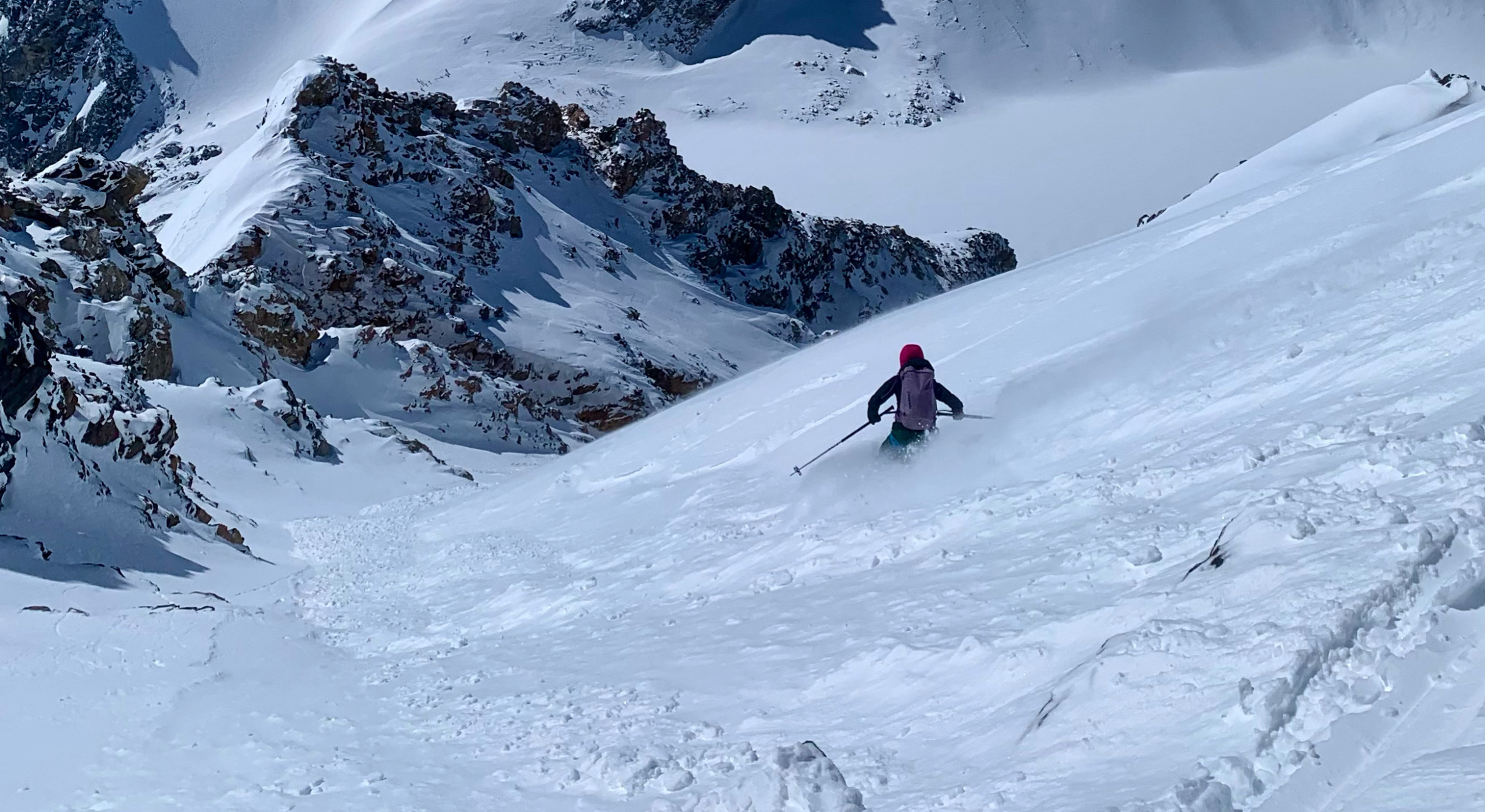
I’m wet. My fingers are pruned. I haven’t showered in 25 days and my hair has matted into what I can only describe as… singularity. For 6 weeks in June and July, I am slave to the swing of the tides, to the wane and wail of the winds, to the sighs of the sea, the swells that swallow my little gillnetter, in her melodious rise and falls. From my delirious trance on the flying bridge, I imagine my 29 mesh deep, 4 ⅞” smokey blue MoMoi, draping over my shoulders, accompanying me down snowy slopes in February.

I love the connection that my summers now bring to my winters. I am proud to call myself a first generation fisherm*n, and to be a part of Bristol Bay, notably the world's largest, most pristine and most carefully monitored and managed Wild Sockeye Salmon run. I am proud to be part of the outdoor industry. An industry that cares and wants to preserve the environments that we live and play in. A decade ago, I never would have foreseen the intimate weave of connections between my winter and summer endeavors, but somehow the circularity feels so complete.

Moving material from one sustainable industry to another, results in a circular economy that simultaneously cleans existing trash and prevents more from accumulating, ultimately emitting greenhouse gases associated with the production of virgin plastics. It's gratifying to know that my fishing nets, the very thing that provides my livelihood and feeds the world with a clean, sustainable protein- will play part in a natural progression of sourced materials to their second, third and fourth lives. Though by no means perfected, pursuing efficiency and recycling en-mass, feels like a way to tip the scales of an economy that might one day consciously produce and ethically consume, through first utilizing that which already exists. Thank you Wild Rye for being part of the change.

*Keree Smith owns and operates a commercial gillnetter, the FV Deborah in the summers in Bristol Bay. She also direct-markets wild salmon with her business, “Salty Debby’s”. In the winters, you may find her on miscellaneous mountain adventures or working as a heli ski guide in the Chugach.
Follow along on her adventures or purchase Wild Alaskan Sockeye Salmon:

![[Olive You] Person wearing green overalls standing near a wooden bench outdoors.](http://wild-rye.com/cdn/shop/files/Eevashortoveralls_oliveyou.jpg?v=1772498694&width=2048)

2 comments
Hey Keree, it’s cool to see what you’re doing with your used nets. Thanks for being such a great role model for us all, and in particular for all the young females in the world!
Daniel De Kay
Keree! Nice to meet you. Caity was my first ghost gear intern 6 years ago and she’s told me about your summer-winter melding of adventures. Love the blog post, but I think you meant “omitting” – not “emitting” – in this sentence —
“Moving material from one sustainable industry to another results in a circular economy that simultaneously cleans existing trash and prevents more from accumulating, ultimately emitting greenhouse gases associated with the production of virgin plastics.”
The circularity is fabulous, and getting rid of GHG by catching salmon is a compelling reason to buy from Wild Rye. Headed to their web page now!
Laura Ludwig
Leave a comment
This site is protected by hCaptcha and the hCaptcha Privacy Policy and Terms of Service apply.